The Launch is coming for your wall. The screen can wait its turn.
The gazette goes physical
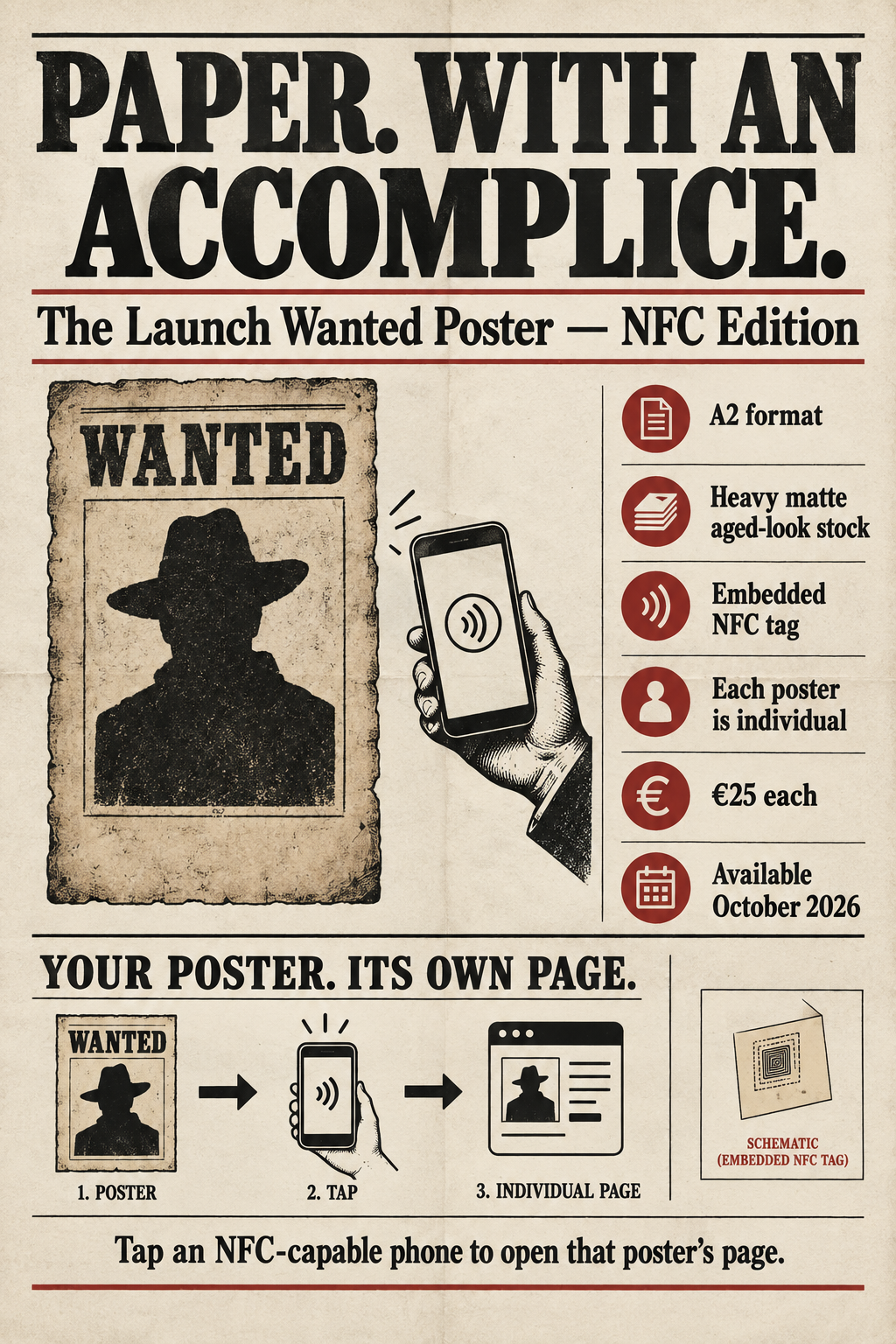
PRESS RELEASE — October 2026. The Launch, the anarchic product gazette, announces its first physical product: The Launch Wanted Poster — NFC Edition. Each individual A2 poster carries an embedded NFC tag. Tap an NFC-capable phone on it and that poster’s own page opens. The print stays on the wall. The connection goes with you.
Available from October 2026 at €25 each, the edition brings together old-school newspaper design and the blunt visual authority of a Western Wanted poster. Heavy matte aged-look stock handles the paper side. A uniquely encoded tag handles the digital side. Neither needs to dress up as the other.
The problem with another thing on a screen
Product launches tend to live behind glass. Another page, another tab, another announcement elbowing its way into the feed. Even the interesting ones can end up sharing space with a forgotten shopping basket and seventeen things marked “read later.” A fine system, if forgetting was the objective.
The Launch’s first physical release takes a different route. It gives the gazette a place in the room, not just a place in browser history. The digital connection remains, but it starts with something you can actually put on a wall. Paper gets first billing for once.
A Wanted poster with somewhere to go
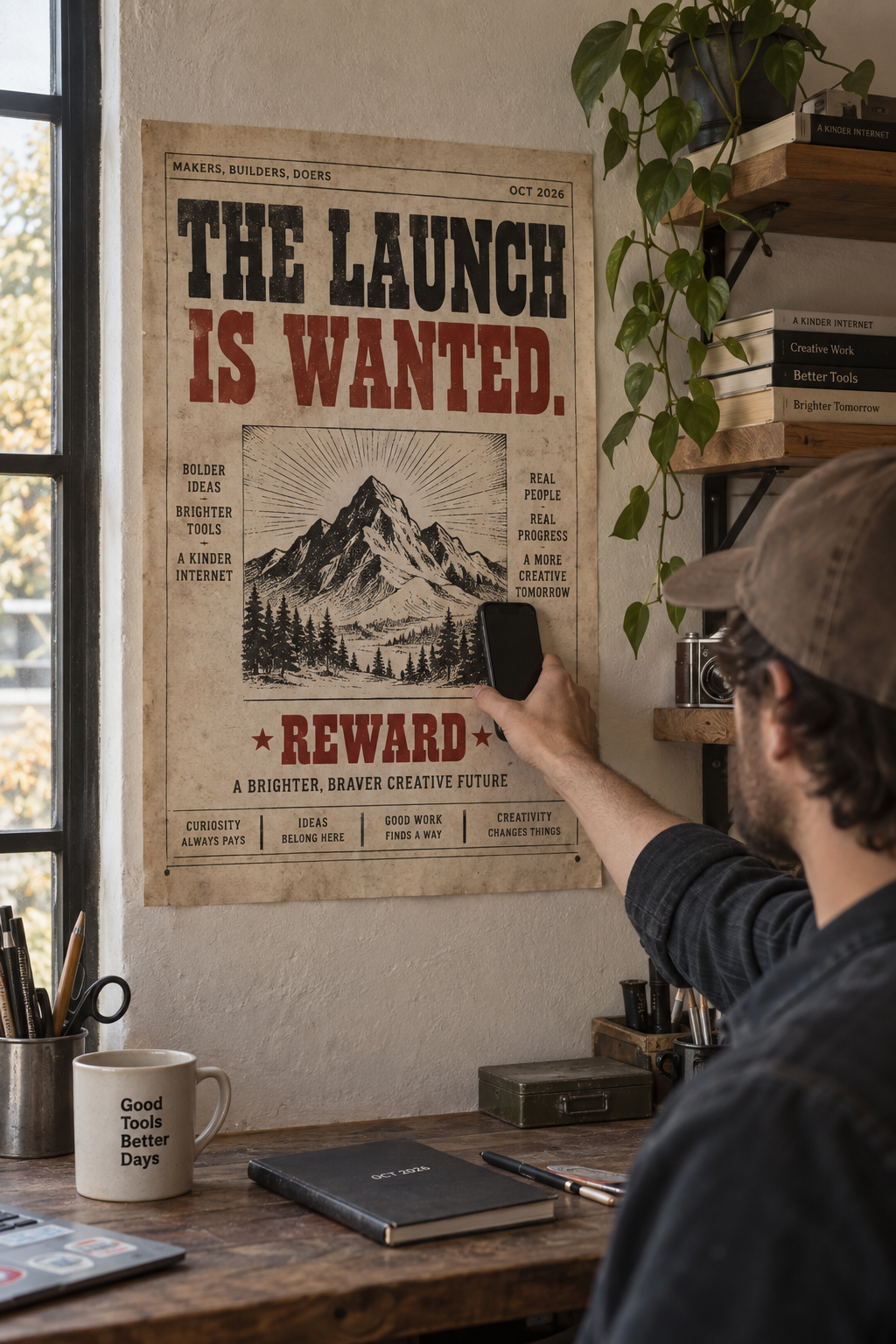
The format is deliberately familiar: newspaper meets Western Wanted notice. It borrows the visual language of public announcements, bold declarations and characters who probably owe somebody an explanation. Here, the subject is The Launch itself. The gazette has finally become something you can hang up.
The NFC element adds a specific function rather than a vague promise of “connected” living. Every poster is individual, and its embedded tag is uniquely encoded to open that poster’s own page. It is not simply a stack of prints all sending readers to the same general destination.
The wall gets the headline. The phone can report for duty.
Paper first. Precision underneath.
A2 gives the Wanted-poster format room to speak. The heavy matte aged-look stock supports the old-school newspaper character without asking a bright screen to impersonate paper. This is a physical edition with a digital connection, not a digital product wearing a paper disguise.
The interaction is equally direct. Bring an NFC-capable phone to the embedded tag and open the poster’s page. The distinguishing detail is the one-to-one relationship: this individual print, this encoded tag, this poster’s page. Small technical distinction. Rather important consequence.
| Specification | Detail |
|---|---|
| Product | The Launch Wanted Poster — NFC Edition |
| Format | A2 poster |
| Paper | Heavy matte aged-look stock |
| NFC | Embedded tag, unique per poster |
| Destination | That poster’s own page |
| Edition | Each poster is individual |
| Price | €25 each |
| Release | October 2026 |
For people who notice the details
The edition is aimed at makers, launch nerds, poster collectors and anyone who reads The Launch. Makers get a straightforward meeting of print and embedded technology. Launch obsessives get the gazette’s first move into physical products. Poster collectors get the A2 format and aged-look stock, with an individual digital connection attached.
For existing readers, the proposition is simpler still: The Launch, now on your wall. No need to become an NFC scholar to appreciate it. The poster does the visual work before a phone gets anywhere near it. The tap is an additional door, not an entrance exam.
Price, release and wall-space negotiations
The Launch Wanted Poster — NFC Edition is available from October 2026, priced at €25 per poster. Each one is individual and NFC encoded. The price buys the physical A2 edition with its embedded tag linking to that poster’s own page.
This release marks The Launch’s first physical product. Not another announcement that disappears beneath the next announcement, but a printed edition built around a simple pairing: a Wanted poster you can display and a page you can open with a tap.
Make a little room. Look for the October release. The gazette has left the browser, and it intends to be noticed.